Buy mtume.com ?
We are moving the project
mtume.com .
Are you interested in purchasing the domain
mtume.com ?
domain@kv-gmbh.de · 0541-91531010
Buy mtume.com ?
What are microscopes?
Microscopes are scientific instruments used to magnify and observe tiny objects that are not visible to the naked eye. They work by using lenses to focus light on the specimen, allowing for detailed examination of its structure and composition. Microscopes are commonly used in fields such as biology, medicine, chemistry, and materials science to study cells, microorganisms, crystals, and other small objects. There are different types of microscopes, including optical microscopes, electron microscopes, and scanning probe microscopes, each with its own specific capabilities and applications. **
What are the advantages and disadvantages of electron microscopes and light microscopes?
Electron microscopes have the advantage of higher resolution, allowing for the visualization of smaller structures such as individual molecules. They also have a greater magnification power compared to light microscopes. However, electron microscopes are more expensive, require specialized training to operate, and samples need to be placed in a vacuum, which can alter their natural state. On the other hand, light microscopes are more affordable, easier to use, and samples can be observed in their natural state without the need for special preparation. However, they have lower resolution and magnification capabilities compared to electron microscopes, limiting the ability to visualize very small structures. **


Similar search terms for Microscopes
Top-Angebote
Products related to Microscopes:
-
Texas Instruments Ti-1726 LommeregnerTexas Instruments TI-1726 Miniskrivebordslommeregneren med attraktiv udformning og SuperView-display. Specifikationer: Stort, 8-cifret (12,5 mm) LCD SuperView-display. Rummeligt tastatur med velplacerede gummiknapper. Knap til (+/-) Knap til kvadratrod Vinklet display gør det nemmere at aflæse. ANYLITE™ solcelledrift. Kan anvendes selv i dårligt lys. str. 80 x 110 mm Vægt: 95 gram140,00 DKK*Shipping: 81,19 DKKSecure redirect to the provider
-
Texas Instruments Ti-1795 Sv BordregnerTexas Instruments TI-1795 SV bordregner Den klassiske mini desktop-regnemaskine med store taster og ekstra stort SuperView display til hjemmet, kontoret eller forretningen. Skråtstillet LCD SuperView display med store tal (14 mm) sikrer god læsbarhed. God plads mellem tasterne, konturtaster og store profiltaster, der giver nem betjening. Skift af fortegn (+/-). Sol- og batteridrevet fungerer overalt. Mål: 14 x 12,2 x 2 cm238,75 DKK*Shipping: 81,19 DKKSecure redirect to the provider
-
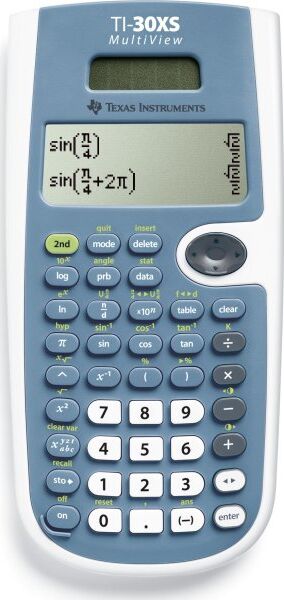
Texas Instruments Ti-30xsmv Matematisk LommeregnerTexas matematikregner TI-30XS Multi-View TI-30XS MultiView™ er den nye videnskabelige lommeregner, som kombinerer de kendte statistiske og videnskabelige funktioner fra den klassiske TI-30 med et flerlinjes (Multi-line) display. TI-30XS MultiView™ fungerer og skriver resultater, som du forventer det. Brøker skrives for eksempel på en rigtig brøkstreg som i lærebøgerne. Specifikationer De vigtige videnskabelige, trigonometriske og hyperbolske funktioner. Multi-linje skærm, så for eksempel brøker skrives naturligt, og du kan se tidligere indtastninger. To-variabel statistik: Indtast / slet / indsæt / editer individuelle statistiske data. "Equation Recall" funktion gør det muligt at genkalde, se og ændre tidligere udregninger og statistiske data. Se og tast brøker på rigtige brøkstreger, som decimaltal eller en blanding. Vælg selv. Dataeditor til at indtaste lister med data. Liste funktion: Kan anvende en funktion på en liste af værdier. Rødder vises, så du kan arbejde med rødder eksakt, og de kan bruges til at faktorisere nævneren i en brøk. Eksponenter skrives med hævet skrift (superscript). Konvertering er gjort stærkere med en Mode Menu: Indstil forskellige måder at se tal på (Grader / Notationer / flydende antal decimaler). Videnskabelig (Scientific) notation. Arbejd med variable og gem værdier i dine variable. Passer til brugere på: 7.-10. klasse, Gymnasiet og HF, HTX og HHX, Universitet Vægt: 238,3 gram373,75 DKK*Shipping: 81,19 DKKSecure redirect to the provider


-
Why do biologists use light microscopes, even though electron microscopes offer much higher magnification?
Biologists use light microscopes because they are more versatile and can be used to observe living organisms in their natural state. Light microscopes also allow for the observation of a wider range of samples, including transparent or unstained specimens. Additionally, light microscopes are more affordable and easier to use compared to electron microscopes, making them more accessible to a wider range of researchers. **
-
How many microscopes for bacteria are there?
There are several types of microscopes that can be used to observe bacteria, including light microscopes, electron microscopes, and fluorescence microscopes. Each type of microscope has its own advantages and limitations for studying bacteria. For example, light microscopes are commonly used for observing live bacteria, while electron microscopes provide higher resolution images but require specialized sample preparation. Overall, there are multiple options for studying bacteria using microscopy, each with its own unique capabilities. **
-
What is the field of application for microscopes?
Microscopes are used in a wide range of fields including biology, medicine, chemistry, geology, and material science. In biology and medicine, microscopes are used to study cells, tissues, and microorganisms. In chemistry, they are used to analyze the structure of molecules and materials. In geology, microscopes are used to study minerals and rocks, while in material science, they are used to examine the structure and properties of various materials. Overall, microscopes are essential tools for studying and understanding the microscopic world. **
-
Do microscopes and telescopes have the same principle?
Microscopes and telescopes operate on similar principles of using lenses to magnify objects, but they are designed for different purposes. Microscopes are used to magnify small objects such as cells and microorganisms, while telescopes are used to observe distant objects in space. Both instruments rely on the manipulation of light to produce magnified images, but their specific designs and functions are tailored to their intended use. **

In which professions do people work exclusively with microscopes?
People who work exclusively with microscopes can be found in professions such as microbiology, histology, pathology, and certain fields of chemistry and materials science. Microbiologists study microorganisms, histologists examine the microscopic structure of tissues, pathologists analyze tissue samples for diseases, and scientists in chemistry and materials science use microscopes to study the properties and structures of materials at the microscopic level. These professionals rely on microscopes to conduct their research and analysis, making them an essential tool in their work. **
What is the difference between drums and percussion?
Drums are a specific type of percussion instrument that typically have a hollow body and a membrane that is struck to produce sound. Percussion, on the other hand, is a broader category that includes a wide range of instruments that are struck, shaken, or scraped to produce sound. While drums are a subset of percussion instruments, percussion encompasses a variety of instruments such as cymbals, tambourines, maracas, and xylophones. **
Top-Angebote
Products related to Microscopes:
-
Primal Rhythm Tohånds/switch Stang -# 4Rhythm - Let og præcis At mestre tohåndskastet handler i høj grad om at finde rytmen. Når først rytmen sidder, åbner der sig en verden af muligheder. Rhythm-serien er designet specielt til trout-spey på mindre åer og vandløb - ideel til steder, hvor begrænset plads til bagkastet ofte kan være en udfordring. Specifikationer: Højmoduls 55MSI klinger Optimeret til Skagit- eller Scandi-klumper Mat, lavglans stealth-sort finish UHC – Ultra Light Helical Core (ultralet spiralforstærket kerne) LNR – Longitudinal Fibre Alignment (langsgående fiberorientering) LMS – Low Mass Scrim (lavmasseforstærkning) Cordura-stangrør med bærestrop Stofpose til stangen 4-delt rejsedesign Modeller: 11' #4 - 169g 11' #6 - 184g2799,00 DKK*Shipping: 49,00 DKKSecure redirect to the provider
-
Texas Instruments Ti-1726 LommeregnerTexas Instruments TI-1726 Miniskrivebordslommeregneren med attraktiv udformning og SuperView-display. Specifikationer: Stort, 8-cifret (12,5 mm) LCD SuperView-display. Rummeligt tastatur med velplacerede gummiknapper. Knap til (+/-) Knap til kvadratrod Vinklet display gør det nemmere at aflæse. ANYLITE™ solcelledrift. Kan anvendes selv i dårligt lys. str. 80 x 110 mm Vægt: 95 gram140,00 DKK*Shipping: 81,19 DKKSecure redirect to the provider
-
What are microscopes?
Microscopes are scientific instruments used to magnify and observe tiny objects that are not visible to the naked eye. They work by using lenses to focus light on the specimen, allowing for detailed examination of its structure and composition. Microscopes are commonly used in fields such as biology, medicine, chemistry, and materials science to study cells, microorganisms, crystals, and other small objects. There are different types of microscopes, including optical microscopes, electron microscopes, and scanning probe microscopes, each with its own specific capabilities and applications. **
-
What are the advantages and disadvantages of electron microscopes and light microscopes?
Electron microscopes have the advantage of higher resolution, allowing for the visualization of smaller structures such as individual molecules. They also have a greater magnification power compared to light microscopes. However, electron microscopes are more expensive, require specialized training to operate, and samples need to be placed in a vacuum, which can alter their natural state. On the other hand, light microscopes are more affordable, easier to use, and samples can be observed in their natural state without the need for special preparation. However, they have lower resolution and magnification capabilities compared to electron microscopes, limiting the ability to visualize very small structures. **
-
Why do biologists use light microscopes, even though electron microscopes offer much higher magnification?
Biologists use light microscopes because they are more versatile and can be used to observe living organisms in their natural state. Light microscopes also allow for the observation of a wider range of samples, including transparent or unstained specimens. Additionally, light microscopes are more affordable and easier to use compared to electron microscopes, making them more accessible to a wider range of researchers. **
-
How many microscopes for bacteria are there?
There are several types of microscopes that can be used to observe bacteria, including light microscopes, electron microscopes, and fluorescence microscopes. Each type of microscope has its own advantages and limitations for studying bacteria. For example, light microscopes are commonly used for observing live bacteria, while electron microscopes provide higher resolution images but require specialized sample preparation. Overall, there are multiple options for studying bacteria using microscopy, each with its own unique capabilities. **
Similar search terms for Microscopes
-
Texas Instruments Ti-1795 Sv BordregnerTexas Instruments TI-1795 SV bordregner Den klassiske mini desktop-regnemaskine med store taster og ekstra stort SuperView display til hjemmet, kontoret eller forretningen. Skråtstillet LCD SuperView display med store tal (14 mm) sikrer god læsbarhed. God plads mellem tasterne, konturtaster og store profiltaster, der giver nem betjening. Skift af fortegn (+/-). Sol- og batteridrevet fungerer overalt. Mål: 14 x 12,2 x 2 cm238,75 DKK*Shipping: 81,19 DKKSecure redirect to the provider
-
Texas Instruments Ti-30xsmv Matematisk LommeregnerTexas matematikregner TI-30XS Multi-View TI-30XS MultiView™ er den nye videnskabelige lommeregner, som kombinerer de kendte statistiske og videnskabelige funktioner fra den klassiske TI-30 med et flerlinjes (Multi-line) display. TI-30XS MultiView™ fungerer og skriver resultater, som du forventer det. Brøker skrives for eksempel på en rigtig brøkstreg som i lærebøgerne. Specifikationer De vigtige videnskabelige, trigonometriske og hyperbolske funktioner. Multi-linje skærm, så for eksempel brøker skrives naturligt, og du kan se tidligere indtastninger. To-variabel statistik: Indtast / slet / indsæt / editer individuelle statistiske data. "Equation Recall" funktion gør det muligt at genkalde, se og ændre tidligere udregninger og statistiske data. Se og tast brøker på rigtige brøkstreger, som decimaltal eller en blanding. Vælg selv. Dataeditor til at indtaste lister med data. Liste funktion: Kan anvende en funktion på en liste af værdier. Rødder vises, så du kan arbejde med rødder eksakt, og de kan bruges til at faktorisere nævneren i en brøk. Eksponenter skrives med hævet skrift (superscript). Konvertering er gjort stærkere med en Mode Menu: Indstil forskellige måder at se tal på (Grader / Notationer / flydende antal decimaler). Videnskabelig (Scientific) notation. Arbejd med variable og gem værdier i dine variable. Passer til brugere på: 7.-10. klasse, Gymnasiet og HF, HTX og HHX, Universitet Vægt: 238,3 gram373,75 DKK*Shipping: 81,19 DKKSecure redirect to the provider
-
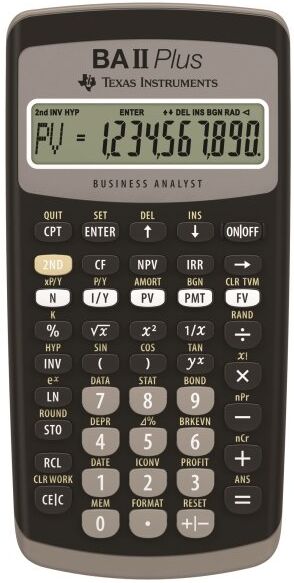
Texas Instruments Ba-Ii Plus FinansregnerTexas Instruments BA-II Plus Finansregner Ideel regnemaskine til statistik- og finansberegninger. Specifikationer Beregning af TVM (time-value-money) annuiteter, terminer, leasing/lejemål, opsparing mm. Generering af amortisationsplaner mm. Udføre pengestrømsanalyser for op til 24 forskellige pengestrømme med op til 4-cifrede hyppighede, beregner NPV og IRR. Statistik med en eller to variabler med fire regressionsindstillinger (lineær, logaritmisk, eksponentiel, og potens). Fire forskellige metoder til beregning af afskrivninger, bogført værdi og restværdi. Beregner også: balancepunkt, rentekonverteringer, delta %, avance og tab. De matematiske funktioner omfatter triognomiske beregninger, naturlige logaritmer og potenser.661,25 DKK*Shipping: 81,19 DKKSecure redirect to the provider
-
Texas Instruments Hp 17bii+ Finans LommeregnerHP 17bII+ Financial lommeregner. Finansregner især til brugere indenfor ejendomshandel og finansiering. Fysiske specifikationer LCD skærm med 2 linjer à 22 tegn. 28 KB RAM brugerhukommelse Mere end 250 nemt betjente funktioner Vælg mellem RPN og algebraisk indtastning Forretnings- og økonomiske faciliteter TVM (lån, opsparing og leasing) 3200 Cash flow funktioner – IRR NVP Annuiteter, amortisering, intern rente, aktier og afskrivning Register baseret Cash flow analyse SL DB SOYD nedskrivningsmetoder Statistik / Matematik Forecasting, valutaomregning, procenter m.m. Skriv og løs ligninger for enhver variabel Listebaseret statistik og forecasting med 2 variabler +, -, x, /, %, 1/x, +/-, 1n, SQRT x, ex, n!, yx, SUM x, SUM x2, SUM y, SUM y2, SUM xy, log, 10x, Pi, x2 Brugertilpassede faciliteter Menuer, prompts og meddelelser Ur med alarmer og aftaler HP Solve Tilbehør Infra-rød printer HP 82240B. Batterier 2 x CR2032 – varenummer GP39017.1121,25 DKK*Shipping: 31,19 DKKSecure redirect to the provider
-
What is the field of application for microscopes?
Microscopes are used in a wide range of fields including biology, medicine, chemistry, geology, and material science. In biology and medicine, microscopes are used to study cells, tissues, and microorganisms. In chemistry, they are used to analyze the structure of molecules and materials. In geology, microscopes are used to study minerals and rocks, while in material science, they are used to examine the structure and properties of various materials. Overall, microscopes are essential tools for studying and understanding the microscopic world. **
-
Do microscopes and telescopes have the same principle?
Microscopes and telescopes operate on similar principles of using lenses to magnify objects, but they are designed for different purposes. Microscopes are used to magnify small objects such as cells and microorganisms, while telescopes are used to observe distant objects in space. Both instruments rely on the manipulation of light to produce magnified images, but their specific designs and functions are tailored to their intended use. **
-
In which professions do people work exclusively with microscopes?
People who work exclusively with microscopes can be found in professions such as microbiology, histology, pathology, and certain fields of chemistry and materials science. Microbiologists study microorganisms, histologists examine the microscopic structure of tissues, pathologists analyze tissue samples for diseases, and scientists in chemistry and materials science use microscopes to study the properties and structures of materials at the microscopic level. These professionals rely on microscopes to conduct their research and analysis, making them an essential tool in their work. **
-
What is the difference between drums and percussion?
Drums are a specific type of percussion instrument that typically have a hollow body and a membrane that is struck to produce sound. Percussion, on the other hand, is a broader category that includes a wide range of instruments that are struck, shaken, or scraped to produce sound. While drums are a subset of percussion instruments, percussion encompasses a variety of instruments such as cymbals, tambourines, maracas, and xylophones. **
* All prices are inclusive of VAT and, if applicable, plus shipping costs. The offer information is based on the details provided by the respective shop and is updated through automated processes. Real-time updates do not occur, so deviations can occur in individual cases. ** Note: Parts of this content were created by AI.